

Instability in the Kenya–Somalia–Ethiopia Borderlands

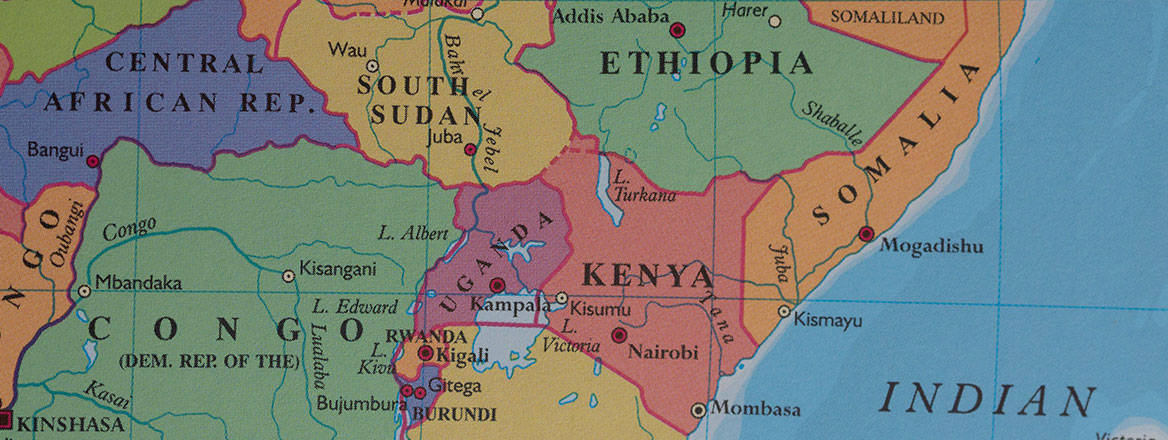
Insights from the Deris Wanaag project on peacebuilding, climate, migration, gender, and conflict in the Kenya–Somalia–Ethiopia borderlands.
Summary
This paper provides critical insights into the complex dynamics of instability in the Kenya–Somalia–Ethiopia borderlands, drawing on findings from the Deris Wanaag project's research conference held in Nairobi in February 2026. The conference brought together experts, policymakers and practitioners to discuss peacebuilding, politics, climate, migration, gender and conflict in one of the most volatile regions in the Horn of Africa. The paper highlights the interconnected challenges of violent extremism, gender-based violence, ethnic tensions, political instability and resource pressures, offering practical recommendations for future interventions.
Key Recommendations
- Strengthen governance and decentralisation: Address corruption and patronage networks at the subnational level to improve resource distribution and service delivery.
- Enhance climate adaptation and anticipatory action: Develop community-driven early-warning systems, improve cross-border cooperation and prioritise funding for proactive climate solutions.
- Promote gender inclusion: Expand women’s political and economic participation through enterprise development, access to credit and conflict-sensitive interventions.
- Address youth exclusion: Create economic opportunities, promote positive masculinities and strengthen community-security relations to reduce vulnerability to armed groups.
- Use research for impact: Focus on actionable insights, co-create research with policymakers and prioritise synthesis reports and participatory methodologies to bridge the gap between evidence and policy.
The paper underscores the need for integrated approaches to peacebuilding, development and security in the borderlands, emphasising the critical role of research in shaping effective interventions. In the context of a rapidly shifting donor landscape, this conference paper examines key challenges and options for fostering regional stability.
Register or log in to continue reading
Account creation is quick, free and gives access to all RUSI research and more
- FREE account
- One-time set-up
- Easy to manage
Introduction
Borderlands have been historically dismissed by those in national capitals as peripheral and treated as buffer zones where insecurity could thrive. However, over the last decade, there has been growing attention within peacebuilding and development policy on the ‘central’ role played by borderlands in national security, ‘conflict, statebuilding and development’. It could be argued that the strength of a country’s identity and cohesion is best measured by understanding the nature of the state’s relationship with its borderlands. These areas can be zones of economic opportunity, but they are also places where the distinction between legal and illegal can be blurred and where transnational conflict economies can thrive.
In the Horn of Africa (HoA), borders drawn by former colonial powers rarely align with local imaginations of identity. Cultural and linguistic ties across international boundaries are often stronger than between those living within the same nation-state.1. While these borderlands should not be considered marginal or ungoverned, they do face unique challenges.
Deris Wanaag (meaning ‘good neighbourliness’ in Somali) was a three-year UK- and Dutch-funded project implemented in the Kenya–Somalia–Ethiopia borderlands between 2023 and 2026. The initiative sought to enhance peace and stability in these areas through integrating humanitarian, development and security interventions.
Avoiding state-centrism, Deris Wanaag worked across the Kenya–Somalia–Ethiopia borders, adopting a systems approach in order to understand and analyse violence. Violent extremism was understood as one component of a broader conflict system, including overlapping threats from public disorder, communal violence, crime, smuggling and other forms of insecurity. The project responded by tackling the system as a whole, collectively addressing the structural drivers, social norms and individual incentives supporting violence.
As the project concluded, a one-day research conference was held at the Rift Valley Institute headquarters in Nairobi on 12 February 2026. Convening practitioners, policymakers and researchers in equal numbers, the event was designed to build on project findings through debate, to maintain focus on the borderlands, and to promote uptake of research findings by a wider audience. It also provided an opportunity to consider the shifting role of research and evidence in peacebuilding and security sector programming.
The timing of the conference emphasised the challenges around the Kenya–Somalia–Ethiopia borderlands. In February 2026, drought conditions were returning to the borderlands following failed rains in late 2025. Concerns were growing in Somalia and Ethiopia over upcoming elections, as well as political tensions in Kenya. In Somalia, relations between the Federal Government of Somalia (FGS) and Somalia’s Federal Member States (FMSs) were arguably at an all-time low. Geopolitical tensions were also escalating following Israel’s recognition of Somaliland. And in the weeks leading up to the conference, there was increased violence on the Kenya side of the border by the Al-Shabaab Islamist militant group. More attacks (including IEDs, vehicle hijackings and small arms attacks) were recorded in January 2026 than in any single month in more than two and a half years.2.
The conference was structured around four panel discussions, each followed by audience interaction. The discussions comprised:
- The political economy of the borderlands.
- The links between climate, migration, livelihoods and conflict in the borderlands.
- Gender and conflict in the borderlands.
- Achieving impact through research.
This Insights Paper is built on these four themes, and seeks to identify the key debates, challenges and research gaps that emerged. Where possible, practical recommendations for future programmes are identified within the context of rapidly evolving international engagement. Unless otherwise indicated, statements in this paper reflect points raised during the discussions. None of the statements are attributable to any specific individual or organisation.
WRITTEN BY
Christopher Hockey
Senior Research Fellow
RUSI Nairobi


Timothy Kimaiyo
Threat Analyst | RUSI Consultant
RUSI Nairobi
Martine Zeuthen
RUSI Associate Fellow, Terrorism and Conflict

- Jim McLeanMedia Relations Manager+44 (0)7917 373 069JimMc@rusi.org
Footnotes
Political Economy and Conflict Analysis (third iteration), Deris Wanaag project, March 2026.
Deris Wanaag maintained a database of security incidents recorded in the Kenya–Somalia–Ethiopia borderlands throughout the project. Collating data provided by private risk management firms (WS Insight and Aldebaran Threat Consultants) and open source reporting, the database contributed to monthly context monitoring reports.
A term used by local communities in the borderlands to describe those who have attained a secular education and are formally employed.
This perceptions data, collected in three iterations between 2024 and 2026, is available from RUSI’s Nairobi office, <https://my.rusi.org/our-offices/rusi-nairobi.html>.
'Pendular movements' are defined by the Mixed Migration Centre as ‘the cyclical or repeated movement of individuals or groups living in border areas between two or more locations’. See Mixed Migration Centre, ‘Defining Pendular Movements: Dynamics and Drivers within the Mandera Triangle (Tri-Border Region of Kenya, Ethiopia, and Somalia)’, MMC Infographic, March 2025, p. 1, <https://mixedmigration.org/resources/defining-pendular-movements-dynamics-and-drivers-within-the-mandera-triangle/>, accessed 2 April 2026.
This research will be published in a RUSI paper in 2026, exploring the intersections between climate change, security, migration and livelihoods.
This research will be published in a RUSI paper in 2026.
This research will be published in a RUSI paper in 2026.
A summary of this research will be published by RUSI in 2026.
A summary of lessons learned will be published by RUSI in 2026.
A summary of this research will be published by RUSI in 2026.