events


General Xiong Guangkai

An address by General Xiong Guangkai

13:00, 9 May 2008
RUSI, Whitehall, London, SW1A 2ET

Link to map: multimap


China’s Security Policy Today

Xiong Guangkai

Chairman of the China Institute for International Strategic Studies

For RUSI Asia Department commentary click here

Recent years have witnessed the steady and striking growth of the Chinese economy, and the noticeable increase of its national strength. China’s GDP in 2007 reached 24.95 billion Yuan, roughly equal to $3.41 billion (based on an exchange rate of 7.3 Yuan to the dollar on January 1, 2008).

Nevertheless, China remains the world’s largest developing country with per capita GDP ranking below 100 other countries; China still has a long way to go before reaching its objectives of industrialisation, urbanisation and modernisation. China’s urban, rural, and regional socio-economic development is far from even. Therefore, it is a must for China to give first priority to development, and concentrate all its efforts on economic development, if China is to become a comprehensively prosperous society by the year 2020 and join the ranks of the moderately developed countries by 2050.

For this reason, China needs a peaceful and stable international environment. China’s approach of adhering to peaceful development embraces both developing itself by way of safeguarding world peace and promoting world peace by means of developing China itself. To do that, China will exert itself to bring about peaceful development, open development, co-operative development and harmonious development. The foundation of China’s security policy today bases itself on the situation of China as a developing country and serves its strategic option of sticking to the road of peaceful development. The purpose and goal of this strategy is both the peaceful development of China and the peaceful development of the world.

Generally speaking, China's present security policy has made three major adjustments with respect to the development of international and domestic conditions.

I. Giving Strong Attention both to Traditional and Non-Traditional Threats to Security

To look at it from the historical point of view, the connotation and denotation has been continuously enriching and stretching. The issue of traditional security remains vital with its centrepiece being the protection of national sovereignty and the prevention of violation of territorial integrity, therefore safeguarding national existence and development. Despite the absence of the possibility of a new world war in the wake of World War II, local wars and armed conflicts have been numerically widespread and show no sign of declining. Among the thirty-three cases in 2007, a slight drop from 2006, thirteen cases were newly erupted, equalling 2006 which is a convincing attest to a world that is by no means tranquil. For that reason, traditional threats to security still require serious efforts to be effectively managed. China pursues a national defence policy that is defensive in nature with its purpose being to deal with the traditional threats to security facing China, and therefore poses no threat to any country.

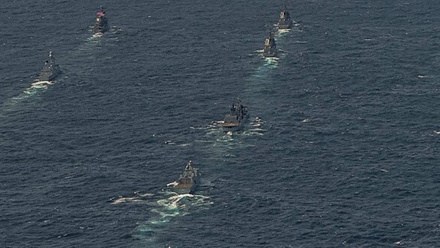
As the international situation evolves and the concept of security changes, non-traditional security issues gradually move into the spotlight, inviting the broad attention of the international community. This so called non-traditional security parallels traditional security and is by no means a novel issue. For instance, terrorist and assassination activities can be traced back for thousands of years, while serious epidemic diseases and natural calamities have been haunting mankind and jeopardizing the safety of human lives all through history. Since the demise of the Cold War, in the wake of 9/11 particularly, the non-traditional threats to security represented by terrorism have begun to figure more prominently with each passing day. The moderate achievements gained in international operations cracking down on terrorism are far from enough to contain the rampant momentum of international terrorist activities. Statistics suggest that over 850 terrorist attacks occurred globally in 2007, taking a toll of over 6300 lives and wounding nearly 13,000. This outnumbers 2006 in terms of both the frequency of terrorist attacks and casualties. Among the above cases, thirty-six fall into the category of major pernicious cases—causing more than one hundred casualties in a single case, an increase of 36 per cent against 2006. China is not the major target of international terrorist attacks, but it is faced with terrorist threats too, with the most noticeable being the terrorist attacks engineered by some external terrorist forces such as the “East Turkistan” terrorist organization against Chinese overseas establishments and personnel. To uproot terrorism has become a global issue that requires the joint efforts of the international community and tests the wisdom, courage and will of all of us. Facts have already vindicated that in dealing with the threat of international terrorism, mere military attack is far from being sufficient. The best strategy lies in embracing comprehensive measures and in the treatment of both the outward symptoms and root causes. Any action taken by a single country is highly unlikely to achieve the intended result; in international co-operation resides the most effective answer to terrorism. The Chinese government has always opposed all types of terrorism. We have advocated treating both the outward symptoms and the root causes, with the greatest effort being devoted to rooting out the breeding ground of terrorism, and constantly boosting international co-operation. In March 2007, China sent ships to participate for the first time in a Pakistani-sponsored joint maritime military exercise named ‘Peace 2007’. This exercise involved nine countries, aimed at training on tactical operations of fighting against terrorism at sea. In May of the same year, China took part in another joint exercise involving the twelve countries of the second conference of the APEC Naval Forum, training on the subject of anti-terrorism. Then, August of the same year saw China partaking in the ‘Peace mission—2007’ an anti-terrorism military exercise staged by the Shanghai Cooperation Organization. September of the same year witnessed China successfully holding, together with the UK, Spain and France, the Maritime Joint Research and Rescue exercise against terrorism, and the ‘Co-operation—2007’ joint anti-terrorism exercise with Russia. Finally, in November, the Army of China and its Indian counterpart jointly waged their first joint war game, with its focus being fighting against terrorism.

II. Giving Weight to Military and Political Securities as well as to the Economic, Cultural, Information, Financial, Energy, Climate and Public Health Securities

The lateral and multi-dimensional point of view also suggests that the connotation and denotation of national security has been constantly stretching beyond the military and political sectors to include numerous fields such as the economy, culture, information, and finance, among others. Among them, the most noticeable at present aside from terrorism are energy security, climate security and public health security.

Energy Security

Recent years have seen the world dogged by the steady rise in oil prices on the international market. This has triggered fierce rivalry and scrambles for the major energy sources and energy shipping passages, thus landing the situation of international energy security in a grimmer state and further tilting the balance of international energy supply. The ‘World Energy Statistics 2006’ issued by British Petroleum states that the proven global oil reserves will only last for another forty years or so if the current speed of exploitation is kept, while natural gas and coal will last for sixty-five and one hundred sixty-two years, respectively, This has clearly demonstrated that energy security has already become a vital strategic issue that has a bearing on the global economy and the security of all the states in the world, and therefore requires the concerted efforts of the international community to find a solution. Being the second biggest energy consumer, and likewise the second biggest energy producer in the world, China attaches great importance to the energy security issue and has all along stuck to an energy strategy centred on basing itself on domestic resources, giving priority to energy conservation, promoting multi-development and enhancing co-operation. This has borne noticeable fruits. China's self-sufficiency rate of energy supply in terms of coal, petroleum and natural gas has for a long time been upwards of 90%, over 20% higher than the average level of the OECD member states. China has insisted on giving first place to energy conservation and as a result, its unit GDP energy consumption in 2007 witnessed an annual drop of about 3.27 per cent. While upholding the policy of using primary energy resources such as coal as the foundation, China encourages the tapping of renewable sources of energy such as wind energy, solar energy, and bio-energy, among others. The proportion of renewable resources of energy to the total energy consumption in China reached 7 per cent in 2006 (note: the figures for 2007 are yet to be published). Based on the ‘Medium and Long-Term Development Plan of Renewable Sources of Energy’ adopted by China's State Council in August 2007, the proportion of renewable resources of energy to the total energy consumption in China will hit 10 per cent by the year 2010, and the renewable resources of energy in China will make up 16 per cent of the energy resource structure by 2020. China adheres to the new energy security concept of ‘reciprocal co-operation, multi-dimensional development, and co-ordinated support’, and plays a dynamic part in international co-operation in the energy sector. China has already put in place bilateral energy dialogue mechanisms with such major energy consumers as the U.S., Japan, India and the EU, has become an official member of such multilateral energy co-operation mechanisms as IEF, WEC and APP, and has been in close touch with international energy organizations like the IEA. In March 2007, Beijing hosted the China-Germany energy law and policy symposium, at which the two sides compared notes extensively and held discussions on issues such as enhancing co-operation in the energy sector. The first minister level dialogue on energy policy between China and Japan was successfully held on April 12, during which the two sides decided to build up co-operation in such areas as energy conservation, petroleum substitutes and new energy. On May 21, China, the U.S., Russia, Japan and France held a global nuclear energy partnership and nuclear energy co-operation international conference, at which broad discussions were conducted over cementing co-operation in the realm of nuclear energy. French President Sarkozy visited China in November, during which the two parties signed an agreement on civilian nuclear energy co-operation. Then, in January 2008, British Prime Minister Brown visited China and the two sides arrived at an extensive consensus on expanding bilateral co-operation in such sectors as tapping new energy and clean energy.

Climate Security

Most scientists agree that in the last almost one hundred years, the global climate has experienced a phenomenal change featuring global warming. Relevant reports produced by the UN demonstrate that the twentieth century stands out to be the warmest one hundred years in the past millennium. Global warming likewise drives the noticeable change in the climate of China, with the annual average temperature rising 0.5 to 0.8 degrees in the last one hundred years. Climate security has posed itself as one of the new challenges staring mankind in the face and its solution resides in the concerted efforts of the international community. The UN conference on climate change was held in Pulau, Bali in December 2007, at which the ‘Bali Road Map’ was endorsed, specifying the topics and timetable for reining in climate change with the joint efforts of the international community. This is therefore an event of landmark significance. The Chinese government believes that climate change is an environmental issue, but in essence, it is an issue of development. China adheres to the ‘common but different liability’ principle as defined in the ‘UN Framework Convention on Climate Change’ and calls on the developed countries to meet the goal of cutting down to the emission targets established in the ‘Kyoto Protocol’ as early as possible, rendering help to developing countries, and continuing to take the lead in committing themselves to the obligation of reducing emissions after 2012. When attending the APEC conference in September 2007, the President of China Hu Jintao proposed propositions of adhering to co-operative efforts in dealing with climate change: sustainable development; giving priority to the leading role of the ‘UN Framework Convention on Climate Change’; and scientific and technological innovation. At the Pulau Bali conference, China proposed that the goal of emission reduction for the developed countries after 2012 should be decided through negotiation before 2009 at the latest, and that the provisions of offering funds and technological transfers to the developing countries as stipulated in the ‘UN Framework Convention on Climate Change’ and the ‘Kyoto Protocol’ should be earnestly put into effect. These proposals won the endorsement of all the participating states and were eventually written into the ‘Bali road map’. As it eased into 2007, the EU decided to slash its greenhouse gas emissions by 20 per cent by 2020, the Summit of Group 8 also agreed to consider seriously the proposal of having greenhouse gas emissions cut by at least 50 per cent by 2050 against their 1990 levels. China welcomes and admires this approach and hopes in the meantime that the developed countries will keep the promises they have made. China's per capita emission of carbon dioxide at present is less than one third of the average level of the developed countries. Nevertheless, motivated by its responsibility to the world, China has been active in fulfilling its due international obligations. China has signed such international treaties as the ‘UN Framework Convention on Climate Change’ and the ‘Kyoto Protocol’ one after another. China has also promulgated such policy papers as ‘China's National Program for Dealing with Climate Change’ which set the objective of trimming 20 per cent of its unit GDP energy consumption against that in 2005 and stretching forest coverage by 20 per cent by the year 2010, thus making its due contributions to delaying global warming. China will continue taking a dynamic part in international co-operation in the field of climate change and making positive endeavours for coping with climate change.

Public Health Security

The outbreak of avian flu in 2003 helped to push public health security to the spotlight, inviting increasing and extensive attention from the international community ever since. The latest statistics issued by WHO suggest that as of April 17, 2008, 381 people contracted avian flu (H5N1) globally, and among them, 240 died. In China, thirty people were infected by avian flu, taking a toll of twenty lives. The Chinese government pays tremendous heed to the issue of public health security, and has put in place notification mechanisms for reporting serious infectious diseases like avian flu and has stepped up exchange and co-operation with other states in this regard. For the sake of promoting global public health security and making more contributions to the cause of world public health, the Chinese government has fully and completely supported Dr. Margaret Chan, former assistant director general of WHO and director of public health of the Hong Kong Special Administrative Region, to run for Director General of WHO. She was formally elected the Director General of WHO on November 9, 2006 as the only candidate. China will continue to improve its communication and co-operation with WHO and its co-operation with all other countries in the world in the field of public health security.

III Giving Full Weight to Both Strengthening China’s own Security and to Showing Solicitude for International Security Co-operation

For over one hundred years stretching from 1840 to 1945, China was subjected to long-term external aggression which landed the Chinese people in a plight of dire misery. And yet, they were not brought to their knees, instead they won the great final victory, fighting against the aggressive war waged by the Japanese fascists. Ever since the establishment of the People’s Republic of China, China has been continuously paying great attention to building up its own security and has made tireless and unrelenting efforts to that end. In recent years, China has been energetically promoting the discarding of the traditional cold war mentality and the development of a new security concept relevant to the current time. As part of that effort, China advanced for the first time a new security concept with mutual trust, mutual benefit and co-ordination as its centrepiece at the Geneva disarmament conference on March 26, 1999. Under the guidance of the new security concept, China has dedicated itself to international security co-operation for all of the years thereafter and has been promoting the idea of enhancing security by virtue of co-operation, hence making positive contributions to world peace and stability.

  1. Earnestly Fulfilling the Obligations and Duties Conferred on a Permanent Member of the UN Security Council

As a permanent member of the UN Security Council, China has always devoted itself to defending the authority and role of the UN, and to making active efforts in safeguarding world peace and stability through the framework of the UN. In dealing with current flashpoints, such as the Korean Peninsula nuclear issue and the Iran nuclear issue, China has been taking an active part in exercising its good offices for a political settlement. China has actively supported the UN Security Council in endorsing Resolutions 1695 and 1718 on the Korean Peninsula issue on July 15 and on Oct. 14, 2006 respectively. Likewise, China has endorsed Resolutions 1696, 1737, 1747, and 1803 on the Iran nuclear issue on July 31 and Dec. 23, 2006, on March 24, 2007 and on March 3, 2008 respectively. This has not only convincingly demonstrated China’s responsible attitude towards the issue of nuclear non-proliferation but has also paved the way for the eventual peaceful settlement of the Korean Peninsula nuclear issue and the Iran nuclear issue, winning wide international acclaim. China's effort paid off particularly on the Korean Peninsula nuclear issue in terms of facilitating the issuance of the ‘9.I 9 Joint Statement’ in 2005 and the agreement of the ‘Initial Action for Implementing the Joint Statement’ in 2007 (the ‘2.13’ Joint Instrument) and the ‘Second Phase Action for Implementing the Joint Statement’ (the ‘10.3’ Joint Instrument) reached during the six party talks. As a result, the Korean Peninsula nuclear issue has embarked on the ‘action for action’ stage.

Taking an Active Part in UN Peacekeeping Operations

1989 was a landmark year, witnessing China joining UN peacekeeping operations for the first time. By the end of April 2008, Chinese forces had participated in eighteen UN peacekeeping operations, fielding 10,010 personnel. In regard to ongoing UN peacekeeping operations, China outnumbers all of the other four permanent members of the UN Security Council in terms of committing troops. China’s active and positive participation in UN peacekeeping operations has played an important role in safeguarding world peace, and has also made sacrifices, with eight of its officers and men having died at their posts.

Earnestly Promoting Dialogue and Co-operation in terms of Regional Security

China has played a dynamic and positive role in promoting the settlement of boundary issues with Russia, Central Asian countries such as Kazakhstan, Kyrgyzstan, and Tajikistan respectively which process has been better employed to give birth to the ‘Shanghai Five’ mechanism which in time evolved into ‘Shanghai Co-operation Organization’ a brand new model of regional co-operation, thus rendering the international community a most desirable twist of thinking in boosting regional dialogue and co-operation over security. China has likewise been taking a dynamic part in such dialogue mechanisms as the ‘10 + 1’ (ASEAN and China), ‘10 + 3’ (ASEAN, China, Japan and RoK), the ASEAN Regional Forum, and better still, launched the initiative that facilitated the establishment of the ASEAN Regional Security Policy Conference in 2003. This has resulted in boosting considerably the military exchanges and mutual trust among all the parties of the ASEAN Regional Forum. Further, China has been equally dynamic and active in getting involved in the dialogue and co-operation launched by APEC, the East Asia Summit, Eurasia Conference, and Asia Mutual Co-ordination and Confidence Measures Conference, and has played a constructive role in this regard too.

Historically speaking, the Chinese nation has always cherished peace and strived hard to live in harmony. China has adhered to the spirit of ‘the strong not bullying the weak’ and ‘the rich not affronting the poor’, and stands for ‘making all nations live together peacefully’. China's basic policy is to hold fast to the road of peaceful deve1opment. To do that, we support shaping an international security milieu featuring mutual co-ordination; clinging to the approach of building up mutual trust by way of dialogue, hashing out disputes by means of negotiation, and seeking stability by virtue of co-operation. This serves the purpose of seeking solutions to the various traditional and non-traditional issues, dealing with all the kinds of threats and challenges staring the world in its face, and dynamically boosting a lasting world peace and common prosperity.

The views expressed here do not necessarily reflect those of RUSI.